Elevating Visual Storytelling with the Olives Icon from Italy Collection
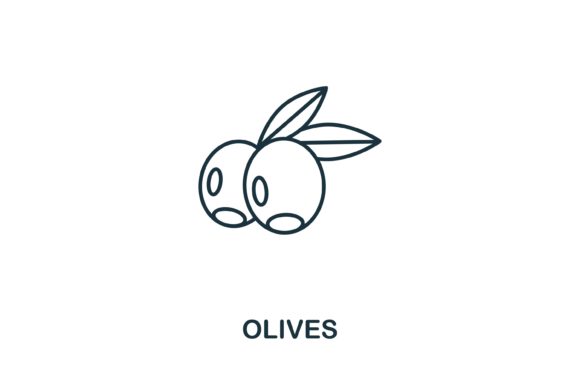
In the rapidly evolving landscape of digital design and brand communication, the search for authentic, culturally resonant visual assets has never been more critical. Professionals across marketing, web development, and content creation are moving away from generic stock imagery in favor of symbols that carry specific narrative weight. At the forefront of this shift is the Olives Icon from Italy Collection, a specialized graphic asset that bridges the gap between traditional Mediterranean heritage and modern minimalist aesthetics. This vector graphic is not merely a decorative element; it is a strategic tool for designers and entrepreneurs seeking to convey quality, tradition, and organic authenticity in an increasingly saturated market.
The Intersection of Cultural Heritage and Modern Minimalism
The contemporary design industry is currently navigating a significant transformation. While technology drives innovation, consumer sentiment is gravitating toward nostalgia, craftsmanship, and tangible connections to nature. The Olives icon from italy collection sits precisely at this intersection. It represents a broader trend where cultural specificity replaces vague internationalism. In previous decades, global brands often sanitized their visuals to appeal to everyone, resulting in a homogenized aesthetic that lacked soul. Today, specificity sells. Audiences crave stories rooted in real places and traditions.
This icon serves as a visual shorthand for the "Made in Italy" value proposition without relying on clichéd national flags or overused landmarks. Instead, it leverages the olive branch—a symbol universally recognized for peace, prosperity, and culinary excellence—to evoke a sophisticated lifestyle. For web designers and infographic creators, this means having access to a symbol that instantly communicates premium quality and artisanal care. The simple line art style ensures that this cultural depth does not come at the cost of modern usability. It remains clean, scalable, and perfectly suited for responsive interfaces where complex illustrations often fail.
Adapting to Changing Creative Workflows
The relevance of this asset extends beyond its aesthetic appeal; it addresses fundamental shifts in professional workflows. Freelancers and agency teams operate under tight deadlines and require assets that are both versatile and technically robust. The provision of both EPS and JPG files acknowledges the hybrid nature of modern design work. The EPS format ensures that the vector graphics remain infinitely scalable for large-format printing, packaging design, or high-resolution branding materials without pixelation. Simultaneously, the JPG file offers immediate utility for quick mockups, social media posts, or internal presentations.
Furthermore, the emphasis on being "easy to edit and use" speaks directly to the democratization of design. We are seeing a rise in cross-functional teams where marketers and entrepreneurs often handle basic design tasks alongside dedicated creatives. A simple line olives icon for templates allows non-specialists to maintain brand consistency without needing advanced illustration skills. The clean geometry of the vector paths means that colors can be adjusted, strokes modified, and compositions rearranged in seconds within standard software like Adobe Illustrator, Figma, or Canva. This flexibility reduces friction in the creative process, allowing teams to iterate faster and respond to market trends with agility.
Semantic Value in Brand Identity and Marketing
Why are professionals paying closer attention to niche assets like the Olives Icon from Italy Collection? The answer lies in semantic value. In user experience (UX) design and information architecture, icons serve as cognitive anchors. They help users process information quickly by associating visual shapes with established concepts. An olive icon carries a dense cluster of positive associations: health, sustainability, luxury, and Mediterranean diet culture.
For businesses in the food and beverage, wellness, travel, and sustainable living sectors, this icon acts as a powerful trust signal. Consider a meal-kit delivery service emphasizing organic ingredients, or a travel agency curating boutique Tuscan experiences. Using a generic leaf might suggest "eco-friendly," but using a stylized Italian olive suggests "curated European excellence." This distinction is vital for conversion optimization. Consumers are becoming adept at reading visual cues, and they associate precise, well-crafted iconography with professional integrity and product quality.
- Culinary Authenticity: Perfect for restaurants, recipe blogs, and gourmet e-commerce platforms requiring a touch of rustic elegance.
- Wellness and Skincare: Leverages the association of olive oil with natural beauty and holistic health routines.
- Sustainable Tourism: Evokes the slow-travel movement and agritourism experiences central to the Italian countryside.
- Corporate Responsibility: Serves as a softer, more organic alternative to standard corporate sustainability icons.
The Role of Vector Graphics in Responsive Ecosystems
From a technical perspective, the demand for simple line olives icon for templates reflects the necessities of responsive design ecosystems. As screen sizes fragment from smartwatches to 4K monitors, raster images have become liabilities. Vector graphics are the only future-proof solution for interface design. The Olives Icon from Italy Collection is engineered with this reality in mind. Its line-weight balance ensures legibility even at favicon sizes, while retaining enough detail to look intentional on retina displays.
This technical reliability supports broader business goals. When a brand’s visual identity breaks down on mobile devices, credibility suffers. By utilizing professionally crafted vector assets, companies ensure that their storytelling remains intact across every touchpoint. Moreover, the lightweight nature of SVG and EPS exports contributes to faster page load times, a critical factor for SEO and user retention. In an era where Core Web Vitals dictate search rankings, choosing optimized graphical assets is as much a technical decision as it is a creative one.
Future-Proofing Visual Assets Through Versatility
Looking forward, the utility of assets like the Olives Icon from Italy Collection will likely expand as augmented reality (AR) and spatial computing enter mainstream marketing. Simple, distinct line icons translate exceptionally well into 3D environments and AR overlays because their geometry is unambiguous. A complex, shaded illustration may look muddy when rendered in a headset or through a phone camera lens, but a clean vector symbol retains its clarity. Early adopters who build libraries of high-quality, semantically rich vector icons are effectively preparing their brand assets for the next generation of immersive digital experiences.
Additionally, the trend toward personalization in marketing demands modular design systems. Brands can no longer rely on a single static logo; they need families of related symbols that can be mixed and matched to suit different campaigns, seasons, and audience segments. The Italian olive icon functions as a modular component within such a system. It can be paired with typography, photography, or other icons to create dynamic compositions that feel fresh yet consistent. This modularity is essential for maintaining engagement in a content-saturated environment where novelty is prized but coherence is required for long-term brand equity.
Practical Application for Diverse Creators
The accessibility of this collection makes it particularly valuable for the growing gig economy and freelance sector. Independent creators often lack the budget for custom illustration commissions but refuse to compromise on quality. Accessing a premium Olives icon from italy collection allows freelancers to deliver agency-level polish to their clients at a fraction of the cost. Whether designing a wedding invitation suite for a destination ceremony in Puglia or creating pitch deck templates for an ag-tech startup, the asset provides immediate contextual grounding.
- Template Integration: Designers can embed the icon into presentation and social media templates, creating reusable assets that save hours of future work.
- Infographic Clarity: Use the icon as a bullet point or section header in data visualization to break up text and reinforce thematic consistency.
- Packaging Prototyping: Rapidly test label designs and box art using the editable EPS file before committing to expensive print runs.
- Digital Advertising: Incorporate the JPG version into display ads to increase click-through rates through recognizable cultural signaling.
Ultimately, the enduring appeal of the Olives Icon from Italy Collection lies in its ability to satisfy multiple demands simultaneously. It honors tradition while embracing modern technology. It offers artistic beauty without sacrificing functional utility. It supports individual creativity while enabling scalable business operations. As the digital landscape continues to prioritize authenticity and user-centric design, assets that combine cultural resonance with technical excellence will remain indispensable tools for professionals. By integrating such thoughtful symbolism into their workflows, creators do not just decorate their projects; they deepen the connection between their brands and their audiences, ensuring that their message is not only seen but felt.