Designing with Nostalgia: The Retro Dance Icon in Elderly Care Graphics
In the vast landscape of digital design and visual communication, symbols serve as the universal language that bridges gaps between complex concepts and immediate understanding. Among the myriad of icons available to designers, educators, and healthcare professionals, the retro dance icon from elderly care collections occupies a unique and powerful niche. This simple line element is more than just a decorative graphic; it is a semantic tool that conveys joy, movement, memory, and vitality. Whether you are building a website for a senior living community, creating an infographic about active aging, or designing templates for geriatric therapy, understanding the depth and utility of this specific vector symbol is essential for effective communication.
The Semantics of Movement in Senior Care Design
To fully appreciate the value of a retro dance symbol, one must first understand the shift in how society views aging. Historically, visual representations of elderly care were often clinical, sterile, or overly passive. Imagery focused on medical equipment, wheelchairs, or static portraits. However, modern gerontology and person-centered care models emphasize active aging, cognitive engagement, and emotional well-being. The retro dance icon perfectly encapsulates this paradigm shift.
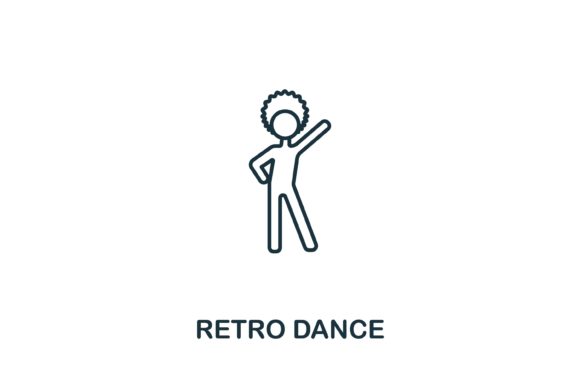
When a designer chooses a simple line element depicting a figure in a vintage dance pose, they are signaling several things simultaneously:
- Vitality over Frailty: The icon suggests physical capability and energy rather than decline.
- Cultural Resonance: "Retro" styles connect with the formative years of current seniors, triggering positive nostalgia and familiarity.
- Social Connection: Dance is inherently social, implying community and interaction rather than isolation.
- Cognitive Health: Learning and recalling dance steps is a recognized method for maintaining neuroplasticity.
This symbolic weight makes the retro dance icon a superior choice for templates and web designs aimed at this demographic. It respects the audience’s history while promoting a contemporary view of health.
Technical Versatility: EPS and JPG Formats
For designers and content creators, the practical application of this symbol relies heavily on file format versatility. When acquiring a retro dance icon from an elderly care collection, ensuring access to both EPS and JPG files is non-negotiable for professional workflows.
The EPS (Encapsulated PostScript) file is the cornerstone of editable vector graphics. Because this retro dance symbol is designed as a simple line element, the EPS format allows for infinite scalability without pixelation. A designer can resize the icon to fit a massive billboard for a community center or shrink it down for a business card, and the lines will remain crisp. Furthermore, the vector nature of the EPS file means every anchor point and curve is editable. If a brand requires a specific color palette or needs to adjust the thickness of the line art to match other UI elements, the EPS file facilitates these changes effortlessly in software like Adobe Illustrator or Affinity Designer.
Conversely, the JPG file serves immediate, raster-based needs. Not every stakeholder in an elderly care project has access to vector editing software. Administrators, therapists, or educators may need to insert the retro dance symbol directly into a Word document, a PowerPoint presentation, or a basic email newsletter. The JPG provides a universally compatible, easy-to-use version that maintains the integrity of the simple line aesthetic without requiring technical expertise. Having both formats ensures the asset is accessible across the entire spectrum of users, from professional graphic designers to care coordinators.
Practical Applications in Modern Media
The utility of the retro dance icon extends far beyond mere decoration. Its simple line art style makes it exceptionally adaptable for various modern applications in education, business, and technology within the senior care sector.
Web Design and User Experience (UX)
In web design for elderly audiences, clarity and cognitive ease are paramount. Complex, hyper-realistic illustrations can sometimes be visually noisy or difficult to parse for users with declining vision or processing speed. A simple line element retro dance symbol offers high contrast and immediate recognition. When used as a navigation icon for "Activities," "Social Events," or "Therapy Programs," it reduces cognitive load. The minimalist aesthetic aligns with modern accessibility standards, ensuring that the interface remains clean and intuitive. Additionally, the retro styling adds warmth to what might otherwise feel like a cold institutional website, fostering a sense of belonging before the user even reads the content.
Infographics and Educational Materials
Educational materials regarding senior health often struggle to balance medical accuracy with engagement. When creating infographics about the benefits of movement therapy, fall prevention, or social engagement, the retro dance icon acts as a visual anchor. For example, an infographic detailing "Five Ways to Boost Brain Health" can use this symbol to represent physical exercise in a way that feels inviting rather than prescriptive. The vector nature of the graphic ensures that even when printed in large-format posters for clinic waiting rooms, the lines remain sharp and professional. This visual consistency helps build trust in the educational material being presented.
Branding and Logo Integration
For businesses in the silver economy, branding must navigate the delicate line between respectful care and vibrant living. The retro dance icon can serve as a foundational element in logo design or brand identity systems. Because it is a vector graphic, it can be integrated seamlessly with typography. A senior fitness studio might combine the icon with bold, mid-century modern typefaces to create a cohesive brand that screams "fun" and "nostalgia." The editability of the EPS file allows designers to modify the icon’s posture or attire to better align with specific brand values, making it a customizable asset rather than a generic stock clip-art.
Addressing Common Misunderstandings in Visual Representation
While the retro dance icon is a powerful tool, it must be used with intentionality to avoid common pitfalls in elderly care design. Understanding these nuances separates amateur design from professional, empathetic communication.
Misconception 1: Retro Means Outdated.
Some designers fear that using retro imagery implies that the facility or service is old-fashioned or behind the times. However, in the context of elderly care, "retro" is a stylistic choice that honors the user's identity, not a reflection of the organization's operational capacity. The key is pairing the retro icon with modern layout grids, contemporary typography, and fresh color schemes. This juxtaposition signals that the care is modern, but the respect for the individual’s past is timeless.
Misconception 2: Simple Line Art Lacks Emotion.
There is an assumption that detailed, photographic realism is required to convey empathy. In reality, simple line elements often allow for greater emotional projection. By abstracting the figure into a clean symbol, the viewer projects their own memories and feelings onto the icon. A photograph of a specific person dancing is a documentary record; a line-art symbol of dancing is an invitation. It represents the concept of dance, which is universally applicable to all members of the community.
Misconception 3: Icons Are Just Fillers.
In template design, icons are often treated as afterthoughts to break up text. However, in elderly care, the retro dance symbol should be treated as functional content. It communicates safety, activity policy, and cultural programming as effectively as a paragraph of text. Designers should give the symbol adequate whitespace and prominence, treating it with the same hierarchy as headlines or call-to-action buttons.
The Broader Significance of Accessible Vector Assets
The availability of easy-to-edit, multi-format assets like the retro dance icon reflects a maturing design ecosystem for the aging population. As the global demographic shifts, the demand for specialized, respectful, and versatile visual resources grows. Providing both EPS and JPG formats acknowledges the diverse skill sets of the people working in elderly care. It democratizes good design, allowing a small non-profit care home to achieve the same visual polish as a large corporate provider.
Furthermore, the focus on "simple line elements" speaks to the broader trend of inclusive design. Simplicity is not a lack of sophistication; it is the result of distilling a complex idea into its most communicative essence. In the context of retro dance, that essence is the enduring human spirit of celebration. By utilizing these vector graphics thoughtfully, designers and caregivers do more than decorate a page; they validate the experiences of older adults and promote a vision of aging that is dynamic, connected, and full of rhythm.
Ultimately, whether you are a seasoned graphic designer looking for a scalable vector for a rebrand, or a care coordinator needing a quick JPG for a weekly activity flyer, the retro dance icon from the elderly care collection is an indispensable asset. It bridges the gap between technical utility and emotional resonance, proving that even the simplest line can carry the weight of profound human connection. By choosing symbols that honor both the past and the present, we create digital and physical environments where seniors feel truly seen, celebrated, and understood.