Groundhog Day: Leveraging Simple Line Icons for Seasonal Design and Branding
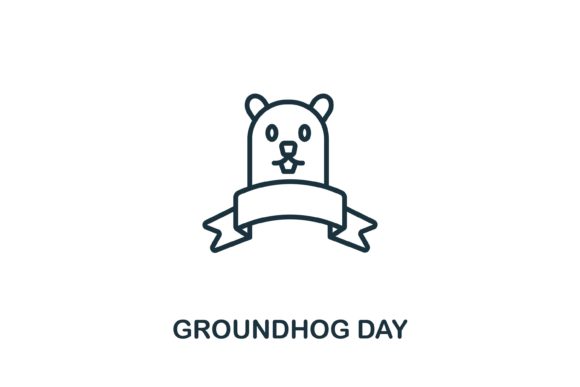
Groundhog Day occupies a unique space in the cultural calendar. Falling on February 2nd, it serves as the unofficial bridge between the winter holidays and the arrival of spring. For designers, marketers, and content creators, this date presents a specific challenge: how to create visual assets that feel festive without being overly juvenile or cliché. This is where the utility of a simple line Groundhog Day icon becomes apparent. Unlike complex illustrations, a minimalist vector symbol offers versatility across professional templates, web design headers, and educational infographics. When you acquire a clean EPS and JPG file package, you are not just getting a picture of a rodent; you are securing a flexible design element that can adapt to corporate newsletters, retail promotions, and social media campaigns alike.
Understanding the Cultural Context for Better Design
To use a Groundhog Day icon effectively, it helps to understand what the day actually represents to your audience. Rooted in Pennsylvania Dutch superstition and weather lore, the tradition hinges on whether Punxsutawney Phil sees his shadow. If he does, six more weeks of winter follow; if not, spring arrives early. While meteorologists may scoff at the accuracy, the public embraces the whimsy.
This duality is crucial for design application. The holiday is about anticipation and transition. When selecting or editing a simple line icon, consider which narrative you are supporting. A groundhog emerging from a burrow suggests hope and new beginnings, perfect for spring sales or wellness brands. Conversely, a groundhog recoiling or casting a shadow can be used humorously for "winter clearance" events or cozy indoor product lines. Understanding this nuance prevents the icon from feeling like generic clip art and instead makes it a strategic communication tool.
Practical Applications Across Industries
The true value of an easy-to-edit vector graphic lies in its cross-industry applicability. A simple line aesthetic strips away unnecessary detail, allowing the symbol to function as a logo, a bullet point, or a watermark depending on the context.
Retail and E-Commerce Promotions
For online stores, February 2nd is a tactical opportunity to break up the post-holiday sales slump. Retailers often use Groundhog Day icons to frame limited-time offers. Because line art scales perfectly without pixelation, these icons work exceptionally well in email marketing headers and mobile app banners. A minimalist groundhog paired with bold typography creates a modern, uncluttered look that drives attention to discount codes rather than distracting from them. The EPS format allows designers to quickly adjust stroke weights to match existing brand guidelines, ensuring the seasonal asset doesn't clash with the store’s permanent visual identity.
Educational Content and Infographics
Teachers and educational content creators face high demand for Groundhog Day resources. However, many available assets are too cartoonish for older students or adult learners. A simple line icon strikes the right balance of engagement and maturity. These symbols are ideal for:
- Weather Science Infographics: Illustrating the difference between folklore and meteorology.
- History Timelines: Marking the evolution of the tradition from German Candlemas to American pop culture.
- Prediction Charts: Serving as visual markers for probability lessons or data visualization exercises.
Because the files are easy to edit, educators can recolor the vectors to differentiate between historical facts, scientific data, and fun trivia within a single worksheet or slide deck.
Corporate Communications and HR
Internal communications often struggle to acknowledge minor holidays without seeming unprofessional. A sophisticated line-art groundhog provides a safe middle ground. HR departments can use these icons in newsletters announcing winter wellness tips, office temperature policies, or upcoming spring planning meetings. The vector format ensures the graphic looks crisp on both high-resolution office monitors and printed memos. It adds a touch of personality to internal messaging while maintaining a clean, corporate-appropriate aesthetic.
Technical Considerations for Vector Assets
When integrating a Groundhog Day icon into your workflow, the file format dictates your creative freedom. Receiving both EPS and JPG files covers the spectrum of digital and print needs, but knowing when to use which is essential.
The EPS (Encapsulated PostScript) file is your master copy. This is the vector format that allows for infinite scaling and path editing. If you need to change the groundhog’s color to match your website’s hex code, or if you need to separate the shadow from the animal for an animation, the EPS is required. It is also the necessary format for large-scale printing, such as window decals or trade show banners related to seasonal events.
The JPG file serves as a quick-reference or web-ready asset. While not editable in the same way, it is universally compatible. Use the JPG for rapid social media posts, embedding in Word documents, or sharing with team members who do not have vector software like Adobe Illustrator or Affinity Designer. However, be mindful of resolution; always check the DPI before using a JPG for print to avoid blurriness.
Navigating Style and Audience Appropriateness
Not all Groundhog Day icons serve the same purpose. Before downloading or deploying a graphic, assess its stylistic alignment with your target demographic. Adults aged 20–50 generally respond better to abstraction and minimalism than to hyper-realistic or overly cutesy depictions.
Simplicity as a Feature: In web design, cognitive load matters. A complex illustration competes with navigation menus and call-to-action buttons. A simple line icon acts as a visual anchor that reinforces the theme without demanding excessive processing time. This is particularly important for mobile users scrolling through feeds where clarity is paramount.
Cultural Sensitivity and Accuracy: While Groundhog Day is largely secular and lighthearted, it is rooted in specific regional traditions. If your audience is primarily outside of North America, the reference might require brief contextualization. Additionally, ensure the icon depicts a groundhog (marmot) rather than a generic squirrel or beaver. Visual accuracy, even in stylized line art, signals attention to detail and respect for the subject matter.
Maximizing Editability for Unique Campaigns
The phrase "easy to edit" implies more than just changing colors. It suggests the ability to repurpose the asset for multiple touchpoints within a single campaign. Consider a scenario where a local business wants to run a week-long Groundhog Day promotion. With a layered EPS file, a designer could create variations without starting from scratch:
- Day 1 (Teaser): Just the burrow outline, creating mystery.
- Day 2 (Reveal): The full groundhog icon with the main offer.
- Day 3 (Engagement): The icon modified to hold a speech bubble for a user poll.
- Day 4 (Urgency): The icon paired with a clock or hourglass symbol.
This modular approach maximizes the ROI of a single asset purchase. Instead of buying four different graphics, you leverage one well-constructed vector file to maintain visual consistency throughout the campaign lifecycle. This consistency builds recognition and trust, making the seasonal tie-in feel like a natural extension of the brand rather than a forced marketing tactic.
Common Pitfalls to Avoid
Even with high-quality assets, execution errors can undermine the design. One common mistake is ignoring negative space. Simple line icons rely heavily on the balance between the stroke and the empty space around it. Placing a delicate line-art groundhog against a busy photographic background often renders it invisible. Always ensure sufficient contrast or use a solid color block behind the icon to preserve legibility.
Another consideration is licensing and usage rights. While not strictly a design issue, it impacts practical application. Ensure the asset you acquire permits commercial use if intended for retail or branded content. Personal-use-only licenses are fine for classroom worksheets or private invitations but can lead to legal complications in business contexts. Always verify the terms associated with the EPS and JPG download to protect your project.
Finally, avoid over-reliance on the pun. While "predicting savings" or "shadow prices" are classic Groundhog Day tropes, they can feel tired. Using the icon as a subtle design accent rather than the centerpiece of a joke often yields more elegant results. Let the clean lines and professional presentation do the heavy lifting, allowing the copy to provide the wit. This approach respects the intelligence of an adult audience while still participating in the shared cultural moment of February 2nd.