Evaluating the Home Animals Icon for Professional Design Projects
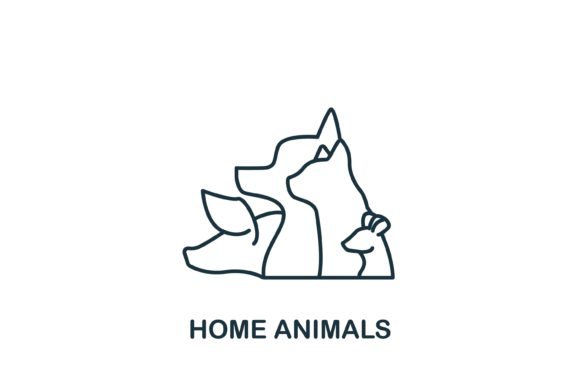
In the landscape of digital asset creation, finding vector graphics that balance aesthetic appeal with functional versatility is a persistent challenge for designers and content creators. The Home Animals Icon collection addresses this specific need by offering a streamlined, line-art representation of domestic pets suitable for a wide array of commercial and personal projects. Unlike complex illustrations that can clutter a layout or overly cartoonish clip art that undermines professional credibility, this symbol set focuses on clean geometry and minimalism. For professionals aged 20 to 50 working in web design, marketing, or education, understanding the practical utility of such assets is essential for maintaining efficient workflows and high-quality output.
This resource is not merely a decorative element; it is a functional component of visual communication. The simple line element approach ensures that the Home Animals Icon remains legible at various sizes, from large hero banners to small mobile navigation buttons. When evaluating vector assets, the primary metric should always be adaptability. This collection provides both EPS and JPG formats, acknowledging that while vectors are ideal for print and scalable web graphics, rasterized versions remain necessary for quick mockups, social media posts, and legacy software compatibility. The inclusion of editable source files transforms this from a static image into a malleable design tool.
Technical Specifications and File Utility
The value of any icon set lies in its technical foundation. The provision of an EPS (Encapsulated PostScript) file is the industry standard for professional vector work. This format preserves the mathematical paths of the artwork, allowing for infinite scaling without pixelation. For a designer creating a billboard for a veterinary clinic or a business card for a pet grooming service, this scalability is non-negotiable. More importantly, the EPS format allows for direct manipulation in Adobe Illustrator, CorelDRAW, or Affinity Designer. Users can adjust stroke weights, modify anchor points, and recolor elements to match specific brand guidelines without degrading image quality.
While the vector file offers maximum flexibility, the included JPG file serves a distinct purpose in the modern content pipeline. Not every stakeholder in a project has access to or proficiency with vector editing software. A high-resolution JPG allows marketers, bloggers, and educators to insert the Home Animals Icon directly into Word documents, PowerPoint presentations, or CMS platforms like WordPress without requiring additional conversion steps. This dual-format delivery reduces friction in collaborative environments where design assets must pass through multiple hands before publication. However, users should note that JPGs do not support transparency; for web use requiring transparent backgrounds, converting the EPS to PNG or SVG via vector software will be a necessary intermediate step.
Editability and Customization Potential
The phrase "easy to edit" carries significant weight in professional circles. It implies that the vector paths are clean, organized, and logically constructed. Poorly digitized vectors often contain stray points, open paths, or excessive nodes that make modification frustrating. A well-crafted Home Animals Icon should feature optimized geometry. This optimization allows for global changes; for example, changing a solid black line to a branded teal color should be achievable with a single selection rather than manual path-by-path adjustments.
Customization extends beyond color. The minimalist line style inherent in this symbol set makes it an excellent base for derivative works. A freelancer designing a comprehensive identity system for an animal shelter might thicken the lines for a bold logo mark or thin them for elegant stationery. Educators creating worksheet templates can easily combine these icons with text boxes or other geometric shapes to create engaging learning materials. The simplicity of the line element acts as a neutral canvas, supporting rather than competing with adjacent typography and imagery.
Practical Applications Across Industries
The versatility of the Home Animals Icon becomes apparent when analyzing its application across different sectors. For web designers and UI/UX professionals, these symbols function effectively as navigational aids or category markers on e-commerce sites selling pet supplies. Their visual weight is balanced enough to guide user attention without overwhelming product photography. In infographic design, where data density is high, simple line icons serve as cognitive anchors, helping viewers process information quickly. Complex, detailed illustrations in infographics often reduce readability; the stripped-back aesthetic of this icon set supports clarity.
- Small Business Branding: Ideal for dog walkers, pet sitters, and boutique pet stores needing immediate visual recognition without the cost of custom illustration.
- Editorial and Publishing: Suitable for blog headers, magazine sidebars, and newsletter graphics where consistent visual language is required.
- Educational Resources: Effective for flashcards, classroom signage, and children’s activity books where clear, recognizable silhouettes aid learning.
- Corporate Communications: Appropriate for internal wellness programs, office pet policies, or CSR initiatives involving animal welfare.
For entrepreneurs and marketers, time is often the most constrained resource. Sourcing individual icons from disparate sources leads to stylistic inconsistency that damages brand perception. Utilizing a cohesive set like Home Animals Icon ensures that all visual touchpoints share the same stroke width, corner radius, and level of detail. This consistency builds trust and professionalism, signaling to the audience that the organization pays attention to detail.
Evaluating Quality and Long-Term Value
When assessing whether to integrate this asset into a permanent library, one must consider longevity. Design trends fluctuate, but functional minimalism tends to age better than stylized realism or trendy effects. The line-art aesthetic of the Home Animals Icon aligns with current standards in flat design and material design, suggesting it will remain relevant for several years. Furthermore, because the files are fully editable, they can be updated as trends shift. If the industry moves toward softer, rounded corners in the future, a skilled designer can modify the vector paths accordingly, extending the asset's lifespan far beyond that of a static raster image.
Reliability also encompasses licensing and usage rights, though specific terms depend on the vendor. Professionals must always verify that the license covers their intended use case, particularly for commercial templates or resale products. Assuming the licensing is appropriate, the return on investment for a versatile vector set is typically high. The cost per use drops significantly when a single asset pack serves dozens of projects over multiple years. Compared to commissioning custom illustrations, which can cost hundreds of dollars per piece, stock vector assets offer a pragmatic solution for budget-conscious businesses that refuse to compromise on visual quality.
Limitations and Considerations for Users
Despite its strengths, the Home Animals Icon is not a universal solution. The minimalist nature means it lacks texture, shading, and emotional nuance found in hand-drawn or photorealistic imagery. For brands positioning themselves as luxurious, artisanal, or deeply emotional, a simple line symbol may feel too clinical or generic. In such cases, this icon set might serve better as a secondary UI element rather than a primary logo. Additionally, users relying solely on the JPG file will face limitations regarding background removal and scalability. Those without vector editing capabilities should factor in the learning curve or the potential need to outsource minor modifications.
Another consideration is distinctiveness. Because line icons are a popular category in stock libraries, there is a risk of visual similarity with other brands using similar assets. To mitigate this, professionals should treat the Home Animals Icon as a starting point rather than a final destination. Combining the icon with unique typography, custom color palettes, or proprietary patterns helps differentiate the final output. Relying on the stock asset in its unmodified state for a primary trademark is generally ill-advised due to potential conflicts and lack of exclusivity.
Ultimately, the decision to utilize this resource should be driven by project requirements rather than novelty. For templates, web interfaces, and informational graphics where clarity and efficiency are paramount, the Home Animals Icon delivers tangible value. It solves specific design problems related to scale, consistency, and editability. By understanding both its capabilities and its boundaries, professionals can leverage this asset to enhance their workflow and produce polished, effective visual communications. The combination of accessible file formats and a timeless aesthetic makes it a sensible addition to the toolkit of any creator working within the domestic animal niche.